SSIS-950: The Complete Guide to Modern Data Integration, ETL Processes, and Data Warehouse Management
In today’s digital economy, businesses collect massive amounts of data from websites, mobile applications, customer relationship management (CRM) systems, enterprise software, cloud platforms, and financial applications. While having access to large amounts of information is valuable, managing it efficiently is often a significant challenge. Data stored in different systems can become inconsistent, incomplete, or difficult to analyse.
This is where ssis-950 becomes an important topic for organizations that depend on reliable data management and business intelligence.
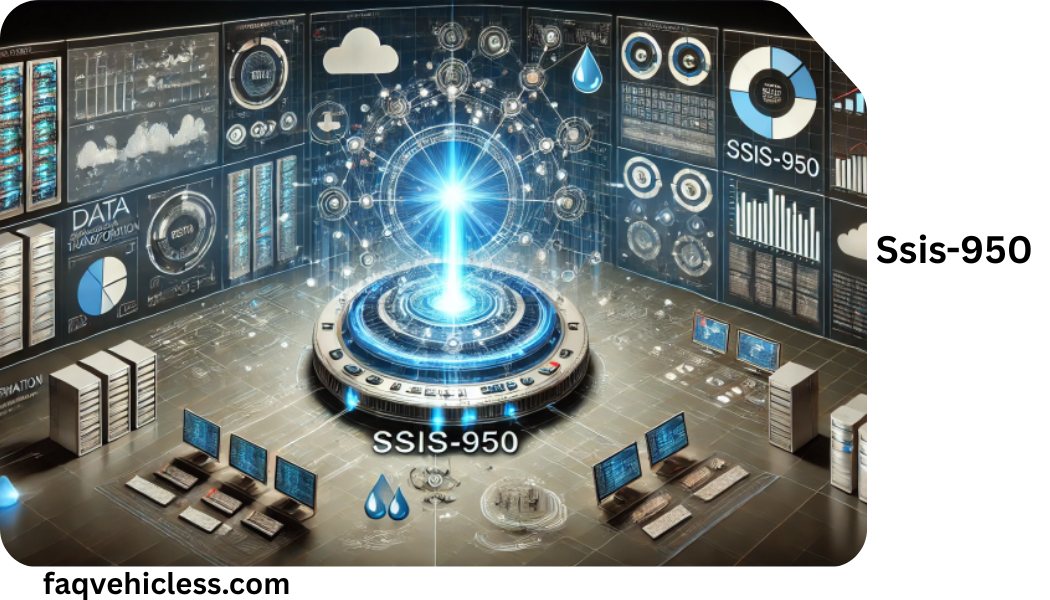
The concept behind ssis-950 is closely associated with modern data integration, ETL (Extract, Transform, Load) processes, and data warehouse optimization. Rather than allowing information to remain scattered across multiple systems, ssis-950 focuses on collecting, transforming, validating, and organizing data into a central location where businesses can generate meaningful insights.
A well-designed data warehouse can transform data chaos into business clarity. Instead of spending valuable time searching through disconnected databases, decision-makers gain access to accurate, organized, and timely information that supports strategic planning.
Whether you are an IT professional, database administrator, business analyst, data engineer, software developer, or business owner, understanding ssis-950 helps explain how modern organizations move, process, and manage data efficiently.
This comprehensive guide explores everything you need to know about ssis-950, including its purpose, architecture, ETL workflows, benefits, business applications, best practices, implementation strategies, and why effective data integration continues to play a critical role in digital transformation.
What Is ssis-950?
Ssis-950 is commonly associated with advanced data integration, ETL workflows, and data warehouse management. It represents a structured approach to extracting information from multiple data sources, transforming that information into a consistent format, and loading it into a centralized repository for reporting, analytics, and business intelligence.
Organizations often collect data from many different systems, including:
- Customer databases
- Enterprise Resource Planning (ERP) software
- Customer Relationship Management (CRM) platforms
- Financial applications
- Inventory systems
- Cloud services
- Web applications
- Marketing platforms
Each system stores information differently.
Without proper integration, organizations struggle to create accurate reports and gain meaningful business insights.
The goal of ssis-950 is to simplify this process by creating reliable, automated data pipelines.
Also read:Pulsamento: A Complete Guide to Understanding the Rhythmic Pulsing Sensation in the Body
Why Data Integration Matters
Modern businesses generate enormous amounts of information every day.
Examples include:
- Customer purchases
- Website traffic
- Sales transactions
- Employee records
- Marketing campaigns
- Inventory updates
- Financial reports
- Operational metrics
When this information remains isolated across multiple systems, decision-making becomes difficult.
Data integration solves this problem by combining information into one trusted location.
Benefits include:
- Better reporting
- Faster analysis
- Improved accuracy
- Reduced manual work
- Better strategic planning
Understanding ETL in ssis-950
The foundation of ssis-950 is the ETL process.
ETL stands for:
- Extract
- Transform
- Load
Each stage plays an essential role in preparing business data for analysis.
Extract
Extraction involves collecting data from different sources.
These sources may include:
- SQL databases
- Excel spreadsheets
- Cloud applications
- APIs
- Enterprise systems
- CSV files
The objective is to gather relevant information without disrupting daily business operations.
Transform
Transformation prepares raw information for business use.
During this stage, data can be:
- Cleaned
- Standardized
- Validated
- Filtered
- Combined
- Converted into consistent formats
Transformation ensures information becomes accurate and reliable before entering the data warehouse.
Load
The final step loads transformed information into the target database or data warehouse.
Once loaded, business intelligence tools can analyse the information to create dashboards, reports, and performance metrics.
How ssis-950 Supports Data Warehouses
One of the primary purposes of ssis-950 is supporting data warehouse development.
A data warehouse stores historical information collected from multiple business systems.
Unlike operational databases that support daily transactions, data warehouses are designed for:
- Business reporting
- Trend analysis
- Forecasting
- Executive dashboards
- Performance monitoring
- Decision support
A properly managed data warehouse transforms scattered business data into organized knowledge.
Core Components of ssis-950
Several components work together to support successful data integration.
Data Sources
Information may originate from numerous systems, including:
- Relational databases
- Cloud platforms
- ERP software
- CRM systems
- Flat files
- Third-party applications
Each source contributes valuable business information.
Data Transformation Engine
The transformation engine processes incoming data.
Typical transformation tasks include:
- Removing duplicates
- Correcting formatting
- Standardizing values
- Merging datasets
- Applying business rules
These steps improve overall data quality.
Destination Systems
Processed information is delivered into destination systems such as:
- Data warehouses
- Reporting databases
- Analytics platforms
- Business intelligence tools
This organized information supports better decision-making.
Why Businesses Need ssis-950
Organizations increasingly depend on accurate information.
Without structured data integration, businesses often experience:
- Duplicate records
- Inconsistent reporting
- Delayed analysis
- Poor decision-making
- Higher operational costs
Ssis-950 helps reduce these problems by creating consistent data management workflows.
Key Benefits of ssis-950
Organizations implementing structured ETL solutions often experience significant improvements.
Improved Data Quality
High-quality information supports better business decisions.
Transformation processes help eliminate:
- Missing values
- Duplicate records
- Incorrect formatting
- Invalid entries
Cleaner data increases reporting accuracy.
Automation
Manual data processing consumes valuable employee time.
Automation allows organizations to:
- Schedule imports
- Update databases automatically
- Reduce repetitive work
- Improve consistency
Employees spend less time handling data manually.
Better Business Intelligence
Reliable information produces stronger business insights.
Managers can monitor:
- Sales performance
- Customer behaviour
- Operational efficiency
- Financial trends
- Marketing effectiveness
Better insights support better decisions.
Scalability
Businesses continuously generate more information.
A well-designed ssis-950 workflow scales alongside organizational growth.
New systems can be integrated without redesigning the entire data architecture.
Improved Decision-Making
Executives rely on accurate reports.
Centralized data helps leadership teams identify trends, forecast future performance, and make informed strategic decisions.
Industries That Benefit from ssis-950
The principles behind ssis-950 apply across many industries.
Healthcare
Healthcare organizations integrate:
- Patient records
- Laboratory results
- Billing systems
- Appointment scheduling
- Insurance information
Integrated data improves patient care and administrative efficiency.
Retail
Retail companies combine information from:
- Sales systems
- Inventory databases
- Customer loyalty programs
- Online stores
Unified reporting supports inventory planning and customer analysis.
Finance
Financial institutions manage:
- Transactions
- Risk analysis
- Compliance reporting
- Customer information
Reliable ETL processes improve accuracy while supporting regulatory requirements.
Manufacturing
Manufacturers collect information from:
- Production systems
- Supply chains
- Equipment monitoring
- Inventory management
Integrated data improves operational performance.
Education
Educational institutions organize:
- Student records
- Financial information
- Academic performance
- Enrollment statistics
Centralized reporting improves institutional planning.
Common Business Challenges Solved by ssis-950
Many organizations struggle with similar problems.
Examples include:
- Information stored in multiple systems
- Duplicate customer records
- Slow reporting
- Manual spreadsheet consolidation
- Inconsistent business metrics
The structured workflows associated with ssis-950 help solve these issues through automation and standardized data management.
How ssis-950 Supports Digital Transformation
Digital transformation depends heavily on reliable information.
Organizations implementing cloud computing, automation, artificial intelligence, and advanced analytics all require high-quality data.
Without proper integration, these technologies cannot deliver accurate results.
Ssis-950 provides the foundation that allows businesses to build modern digital ecosystems using consistent and trustworthy information.
Advanced ETL Strategies Using ssis-950
As organizations grow, the amount of data they generate increases rapidly. A simple ETL process that works for a small company may not be enough for an enterprise managing millions of records every day.
The concepts associated with ssis-950 support more advanced ETL strategies that improve speed, accuracy, and scalability.
Some commonly used approaches include:
- Incremental data loading
- Scheduled automation
- Parallel data processing
- Data validation
- Error handling
- Workflow monitoring
These strategies help organizations process large volumes of information without affecting business operations.
Data Quality Management in ssis-950
Data quality is one of the most important aspects of any data integration project.
Poor-quality data can lead to:
- Incorrect reports
- Poor business decisions
- Duplicate customer records
- Financial inaccuracies
- Compliance issues
The workflow behind ssis-950 emphasizes maintaining high-quality data throughout every stage of the ETL process.
Common data quality practices include:
Removing Duplicate Records
Duplicate information often appears when data comes from multiple systems.
Removing duplicates ensures reports remain accurate while reducing unnecessary storage.
Standardizing Data
Different systems may store information in different formats.
For example:
- Dates
- Phone numbers
- Currency values
- Customer names
Standardization creates consistency across the entire database.
Validating Information
Validation checks whether incoming information meets business rules before entering the data warehouse.
This reduces errors and improves reporting reliability.
Automation Benefits of ssis-950
Automation has become a major priority for modern organizations.
Instead of manually moving information between systems, automated ETL workflows perform these tasks on scheduled intervals.
Automation provides several advantages:
- Faster processing
- Reduced human error
- Lower operating costs
- Improved consistency
- Better productivity
Employees spend more time analysing information instead of preparing it.
Business Intelligence and ssis-950
Business intelligence depends on accurate and organized data.
Without reliable information, dashboards and reports become misleading.
The structured data pipelines supported by ssis-950 provide business intelligence systems with trusted information.
Organizations can generate reports covering:
- Sales performance
- Customer trends
- Marketing campaigns
- Inventory levels
- Financial performance
- Employee productivity
Executives can then make decisions using reliable business insights.
How ssis-950 Improves Reporting
Many companies spend hours combining spreadsheets from different departments.
This manual process often introduces errors and delays.
By integrating data automatically, ssis-950 simplifies reporting.
Instead of collecting information manually, reports can be generated using centralized data that updates automatically.
Benefits include:
- Faster reporting
- Greater accuracy
- Real-time insights
- Consistent metrics
- Reduced manual effort
Supporting Cloud-Based Data Integration
Many businesses have moved from on-premises systems to cloud platforms.
Cloud services generate valuable business information that must be integrated with existing databases.
The concepts behind ssis-950 support cloud integration by helping organizations combine data from:
- Cloud storage
- Business applications
- Online databases
- Customer relationship management platforms
- Financial software
This creates a unified view of organizational information regardless of where the data originates.
How ssis-950 Helps Data Analysts
Data analysts depend on organized information.
Instead of cleaning data manually every day, they can focus on identifying patterns and generating insights.
Well-designed ETL workflows allow analysts to:
- Create dashboards
- Build forecasts
- Identify trends
- Monitor performance
- Support strategic planning
This increases both productivity and decision-making quality.
Supporting Artificial Intelligence and Machine Learning
Artificial intelligence requires clean, reliable, and structured data.
Poor-quality information reduces the accuracy of machine learning models.
The data preparation methods associated with ssis-950 help organizations provide AI systems with consistent datasets.
This improves:
- Prediction accuracy
- Model performance
- Business forecasting
- Customer analytics
- Operational optimization
As AI adoption continues growing, reliable data integration becomes even more valuable.
Data Security Considerations
Business information often includes sensitive data.
Examples include:
- Customer information
- Financial records
- Employee details
- Healthcare data
- Sales information
Organizations implementing ssis-950 should prioritize strong security practices.
Also read:Geekzilla Tio Geek: The Complete Guide to the Ultimate Technology and Geek Culture Platform
These include:
- Access controls
- Data encryption
- User authentication
- Activity monitoring
- Secure backups
Protecting information builds customer trust while supporting regulatory compliance.
Common Mistakes to Avoid
Some organizations encounter unnecessary problems during ETL implementation.
Common mistakes include:
Ignoring Data Quality
Poor input data produces poor output.
Cleaning information before loading it into the data warehouse should always remain a priority.
Lack of Documentation
Documenting workflows helps teams maintain and improve systems over time.
Without documentation, troubleshooting becomes much more difficult.
Poor Error Handling
Every ETL workflow should include procedures for identifying and resolving errors.
Ignoring failures may result in incomplete reports and unreliable business intelligence.
Insufficient Testing
Testing ensures workflows function correctly before processing production data.
Regular testing reduces unexpected failures.
Best Practices for Using ssis-950
Organizations can maximize the value of ssis-950 by following proven best practices.
These include:
- Design scalable ETL workflows.
- Automate repetitive processes whenever possible.
- Validate incoming information.
- Remove duplicate records regularly.
- Monitor workflow performance.
- Secure sensitive business data.
- Maintain detailed documentation.
- Schedule routine maintenance.
- Review reports frequently.
- Continuously optimize performance.
These practices improve reliability while supporting long-term business growth.
The Future of ssis-950
Data management continues evolving as businesses adopt new technologies.
Several trends are shaping the future of modern ETL systems.
Artificial Intelligence Integration
AI-powered data pipelines will automatically identify data quality issues, optimize workflows, and improve processing efficiency.
Cloud-Native ETL
Cloud computing will continue supporting scalable, flexible data integration without requiring expensive local infrastructure.
Real-Time Data Processing
Organizations increasingly require immediate access to business information.
Future ETL solutions will continue expanding support for near real-time analytics.
Advanced Automation
Automation will continue reducing manual intervention through intelligent workflow management and self-monitoring systems.
Enhanced Data Governance
Businesses will place greater emphasis on compliance, transparency, and responsible data management as regulations continue evolving.
Who Should Learn About ssis-950?
Understanding ssis-950 benefits many professionals, including:
- Data engineers
- Database administrators
- Business analysts
- Software developers
- Cloud architects
- IT managers
- Business intelligence specialists
- Enterprise solution architects
- Data warehouse professionals
- Technology consultants
Even business leaders can benefit from understanding how reliable data supports strategic decision-making.
Why ssis-950 Remains Important
Data has become one of the world’s most valuable business assets.
However, information only creates value when it is accurate, organized, and accessible.
The structured data integration principles associated with ssis-950 help organizations transform disconnected information into meaningful business intelligence.
Instead of spending time searching for information, businesses can focus on analysing results, improving operations, and planning future growth.
As organizations continue expanding their digital capabilities, efficient ETL workflows will remain an essential part of successful business operations.
Conclusion
Modern businesses generate more data than ever before, but collecting information alone is not enough. To create real business value, organizations need reliable systems that can extract, transform, and load data into a centralized environment where it can be analysed efficiently. This is where ssis-950 plays an important role.
By supporting structured ETL processes, improving data quality, automating repetitive tasks, and strengthening data warehouse management, ssis-950 helps organizations turn scattered information into meaningful business intelligence. Whether the goal is faster reporting, improved analytics, better customer insights, or stronger strategic planning, effective data integration provides the foundation for smarter decision-making.
As technologies such as artificial intelligence, cloud computing, real-time analytics, and automation continue to evolve, the importance of reliable data pipelines will only increase. Organizations that invest in well-designed data integration strategies today will be better prepared to adapt, compete, and grow in an increasingly data-driven world.
Frequently Asked Questions
What is ssis-950 used for?
Ssis-950 is associated with data integration, ETL (Extract, Transform, Load) processes, and data warehouse management that help organizations collect, organize, clean, and analyse information from multiple data sources.
How does ssis-950 improve data quality?
It improves data quality by validating records, removing duplicate entries, standardizing formats, correcting inconsistencies, and ensuring that only reliable information enters the data warehouse.
Which industries benefit from ssis-950?
Industries such as healthcare, finance, retail, manufacturing, education, logistics, telecommunications, and e-commerce can all benefit from structured ETL workflows and centralized data management.
Why is a data warehouse important when using ssis-950?
A data warehouse stores integrated information from multiple systems in one central location, making it easier to generate reports, perform analytics, monitor business performance, and support informed decision-making.
How does ssis-950 support business intelligence?
By preparing accurate and consistent data for reporting tools and analytics platforms, ssis-950 enables organizations to create reliable dashboards, identify trends, forecast future performance, and make data-driven business decisions.