Zvodeps: The Complete Guide to the Creativity Framework That Blends Structured Planning with Spontaneous Innovation
Creativity has always been one of the most valuable skills in business, education, technology, and personal growth. Every successful invention, product, marketing campaign, and breakthrough idea begins with creative thinking. However, creativity alone is not enough. Great ideas often fail because they lack planning, organization, or execution.
This challenge has led individuals and organizations to search for methods that combine creative freedom with practical structure. One emerging concept attracting attention is zvodeps. Although the term does not have a formal dictionary definition, it represents a creativity framework that combines structured planning with spontaneous innovation.
Rather than viewing planning and creativity as opposite forces, the zvodeps approach suggests they can work together. A structured process provides direction, while spontaneous thinking introduces fresh ideas, unexpected solutions, and innovative perspectives.
This balanced approach is becoming increasingly relevant in today’s fast-changing world, where businesses, entrepreneurs, designers, educators, and creators must constantly adapt to new technologies, changing customer expectations, and competitive markets.
This comprehensive guide explains everything about zvodeps, including its meaning, principles, benefits, applications, implementation strategies, and future potential. More importantly, it explores how this creativity framework can help individuals and organizations produce better ideas without sacrificing organization or efficiency.
What Is Zvodeps?
Zvodeps is a creativity framework that combines two essential elements of successful innovation:
Structured planning.
Spontaneous creativity.
Instead of relying entirely on detailed plans or completely unstructured brainstorming, the framework encourages a balanced process where organization creates stability while creative thinking generates fresh opportunities.
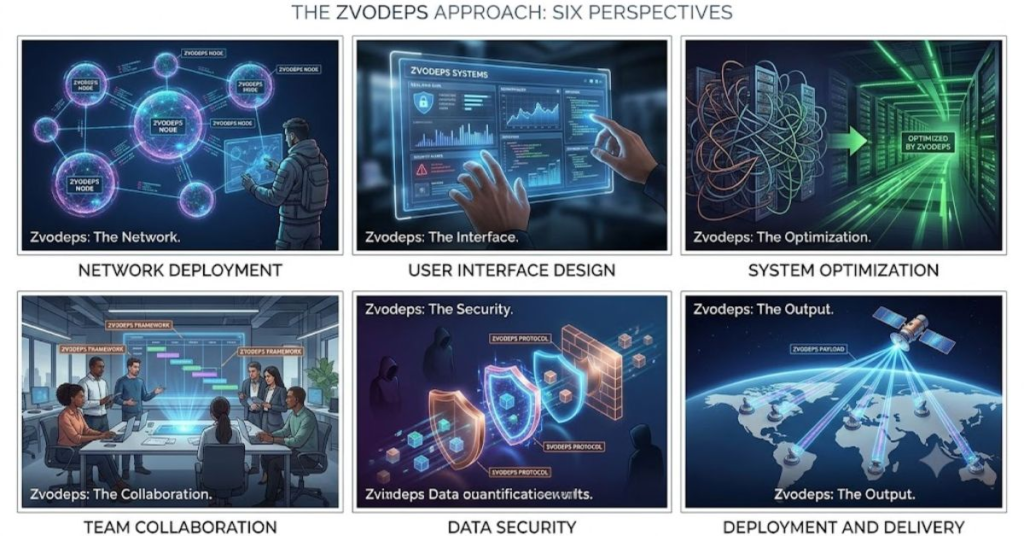
The concept recognizes that successful innovation rarely happens through randomness alone.
Likewise, excessive planning may limit imagination.
Also read:Geekzilla Tio Geek: The Complete Guide to the Ultimate Technology and Geek Culture Platform
By combining both approaches, zvodeps creates an environment where creative ideas can develop within an organized framework.
Understanding the Meaning Behind Zvodeps
Although zvodeps is not currently defined in traditional dictionaries, it represents an evolving methodology rather than a fixed technical term.
Its broader philosophy encourages people to:
Think creatively.
Plan strategically.
Adapt continuously.
Experiment responsibly.
Learn from feedback.
Improve through iteration.
Rather than treating creativity as a mysterious talent possessed by only a few individuals, the framework views creativity as a repeatable process supported by thoughtful planning.
Why Creativity Needs Structure
Many people believe creativity should be completely free from rules.
While freedom encourages imagination, a complete lack of structure often creates problems.
Without planning:
Projects lose direction.
Ideas remain unfinished.
Deadlines are missed.
Resources become wasted.
Teams experience confusion.
Goals become unclear.
Structure helps transform creative ideas into practical results.
Planning provides the roadmap that guides innovation toward successful implementation.
Why Structure Needs Creativity
Planning alone also has limitations.
Organizations that rely exclusively on rigid processes often struggle to adapt to changing markets.
Without creativity:
Innovation slows.
Problem-solving becomes repetitive.
Customer expectations evolve faster than products.
New opportunities remain unnoticed.
Competitive advantages disappear.
Creativity introduces flexibility that allows organizations to respond effectively to new challenges.
This balance forms the foundation of the zvodeps philosophy.
The Core Philosophy of Zvodeps
At its heart, zvodeps promotes balance.
Rather than choosing between planning or creativity, it encourages integrating both throughout the innovation process.
The framework supports several guiding principles.
Planning creates clarity.
Creativity generates possibilities.
Experimentation encourages learning.
Feedback drives improvement.
Adaptability ensures long-term success.
These principles apply across nearly every industry.
Why the Zvodeps Framework Matters Today
Modern industries change faster than ever before.
Artificial intelligence, automation, digital transformation, remote work, and changing consumer expectations require organizations to innovate continuously.
Traditional planning methods alone often cannot keep pace with rapid change.
Likewise, unstructured creativity may produce exciting ideas without practical implementation.
The zvodeps framework offers a balanced alternative suitable for today’s dynamic environment.
The Four Foundations of Zvodeps
The framework can be understood through four interconnected foundations.
Vision
Every creative project begins with a clear objective.
Questions may include:
What problem are we solving?
Who benefits?
What outcome do we want?
Vision creates direction before creative work begins.
Structure
Planning organizes resources, timelines, responsibilities, and priorities.
Structure does not limit creativity.
Instead, it provides stability that supports innovation.
Innovation
This stage encourages idea generation without immediate judgment.
Brainstorming, experimentation, collaboration, and curiosity all contribute to discovering new possibilities.
Innovation remains flexible while still supporting the project’s overall vision.
Refinement
Creative ideas improve through continuous testing, feedback, and revision.
Rather than expecting perfection immediately, the framework encourages gradual improvement.
How Zvodeps Differs from Traditional Brainstorming
Many brainstorming sessions generate dozens of ideas but few meaningful outcomes.
Traditional brainstorming often struggles because:
Ideas lack evaluation.
Projects lack follow-up.
Responsibilities remain unclear.
Execution becomes inconsistent.
Zvodeps extends beyond brainstorming by connecting creativity directly with implementation.
Ideas move systematically from inspiration to execution.
The Psychology Behind Balanced Creativity
Research in psychology consistently shows that creativity benefits from both freedom and limitations.
Too many restrictions reduce imagination.
Too much freedom creates uncertainty.
Balanced environments encourage better thinking because individuals have enough structure to remain focused while still exploring new possibilities.
The zvodeps framework reflects this psychological balance.
Key Characteristics of the Zvodeps Framework
Several characteristics distinguish this creativity model.
Flexibility
The framework adapts to different industries rather than following rigid rules.
Collaboration
Innovation improves when diverse perspectives work together.
Continuous Learning
Every project becomes an opportunity to improve future performance.
Adaptability
Unexpected challenges become opportunities instead of obstacles.
Practical Implementation
Ideas are evaluated according to real-world usefulness rather than theoretical interest alone.
Benefits for Individuals
The framework offers numerous personal advantages.
It helps individuals:
Improve problem-solving.
Develop creative confidence.
Organize ideas effectively.
Reduce decision fatigue.
Increase productivity.
Learn from experimentation.
Balance planning with imagination.
These skills remain valuable across nearly every profession.
Benefits for Businesses
Organizations also gain significant advantages from adopting balanced innovation practices.
Potential benefits include:
Better collaboration.
Faster innovation.
Improved product development.
Higher employee engagement.
Greater adaptability.
More efficient project management.
Better customer satisfaction.
Long-term competitive growth.
Innovation becomes more sustainable when supported by organized processes.
How Zvodeps Supports Better Decision-Making
Decision-making often becomes difficult because people either overanalyze information or act too quickly.
The zvodeps framework encourages balanced thinking.
Creative exploration generates multiple options.
Structured evaluation identifies practical solutions.
This process reduces emotional decision-making while encouraging thoughtful innovation.
Real-World Applications of Zvodeps
Although the framework is flexible, several industries can particularly benefit from its principles.
Business Strategy
Companies can combine long-term planning with creative market adaptation.
Product Development
Teams can organize production while continuously improving products through experimentation.
Education
Teachers can balance structured lesson planning with creative learning activities.
Marketing
Campaigns benefit from organized strategies supported by fresh, innovative ideas.
Technology
Software development often requires structured engineering combined with creative problem-solving.
Personal Development
Individuals can use the framework for goal setting, career planning, and lifelong learning.
Why Adaptability Is Central to Zvodeps
One of the framework’s strongest ideas is adaptability.
Markets change.
Technology evolves.
Customer preferences shift.
Unexpected challenges appear.
Organizations that adapt quickly often outperform competitors relying on rigid systems.
The zvodeps framework encourages continuous adjustment instead of fixed long-term assumptions.
Creativity Is a Skill, Not a Talent
One important interpretation of the zvodeps philosophy is that creativity should not be viewed as a rare gift.
Instead, creativity develops through:
Practice.
Curiosity.
Observation.
Learning.
Experimentation.
Collaboration.
This perspective makes innovation accessible to everyone rather than only highly creative individuals.
Original Insight: Why Zvodeps Reflects the Future of Innovation
Many traditional creativity models were developed during periods of slower technological change. Businesses could spend months planning before implementing new ideas because markets evolved gradually.
Today’s environment is very different. Artificial intelligence, digital platforms, remote collaboration, and rapidly changing customer expectations require organizations to innovate continuously without losing operational stability.
This is where the true value of zvodeps becomes clear. It recognizes that planning and innovation are no longer separate phases. Instead, they operate together throughout the entire lifecycle of a project.
For example, a software company may begin with a structured development roadmap. During testing, customer feedback introduces unexpected insights that inspire new features. Rather than abandoning the original plan, the team adjusts the roadmap while preserving the overall vision.
This continuous balance between stability and flexibility is becoming one of the defining characteristics of successful organizations.
As industries continue evolving, creativity frameworks like zvodeps may become increasingly relevant because they prepare individuals and businesses to innovate without sacrificing organization, consistency, or long-term strategic direction.
How to Implement the Zvodeps Framework
One of the biggest strengths of the zvodeps framework is its flexibility. It does not require expensive software or complicated systems. Instead, it provides a practical process that individuals, startups, creative professionals, educators, and businesses can adapt to their own goals.
A simple implementation process may include the following steps.
Step 1: Define the Objective
Every successful project begins with a clear purpose.
Ask questions such as:
- What problem needs to be solved?
- Who will benefit?
- What does success look like?
- What limitations should be considered?
Clear objectives prevent teams from losing focus during the creative process.
Step 2: Build a Flexible Plan
Planning should provide direction rather than unnecessary restrictions.
A useful plan includes:
- Major milestones
- Deadlines
- Available resources
- Team responsibilities
- Expected outcomes
The plan should remain flexible enough to adapt as new ideas emerge.
Step 3: Encourage Creative Exploration
After establishing the foundation, the team can begin generating ideas.
Creative sessions may involve:
- Brainstorming
- Mind mapping
- Customer interviews
- Market research
- Design thinking
- Rapid idea generation
At this stage, the goal is to discover possibilities rather than judge them immediately.
Step 4: Evaluate Ideas Objectively
Not every creative idea becomes a successful solution.
Each concept should be evaluated based on:
- Practicality
- Cost
- User value
- Scalability
- Innovation
- Long-term sustainability
Balanced evaluation ensures creativity remains connected to real-world needs.
Step 5: Test and Improve
Implementation should never be viewed as the final step.
Successful innovation depends on continuous improvement through:
- User feedback
- Performance measurement
- Team discussions
- Small experiments
- Ongoing refinements
This cycle of improvement is one of the defining characteristics of the zvodeps framework.
Common Mistakes to Avoid
Organizations often misunderstand creativity by focusing too heavily on either planning or innovation.
Common mistakes include:
Overplanning
Too much planning delays action.
Teams spend months preparing instead of testing ideas.
Ignoring Feedback
Customer feedback provides valuable information for improvement.
Ignoring it limits innovation.
Fear of Failure
Innovation requires experimentation.
Every unsuccessful attempt provides useful knowledge.
Lack of Collaboration
Creative thinking improves when people with different backgrounds share perspectives.
Working in isolation often reduces idea quality.
Rigid Processes
Strict rules discourage experimentation.
The framework encourages flexibility without creating disorder.
Why Collaboration Strengthens Creativity
The best ideas rarely come from one individual working alone.
Different perspectives produce stronger solutions because each person contributes unique experiences.
Effective collaboration encourages:
- Better communication
- Faster problem-solving
- More diverse ideas
- Stronger decision-making
- Increased innovation
The zvodeps framework supports collaborative creativity while maintaining organized workflows.
Using Zvodeps for Business Innovation
Businesses face constant pressure to improve products, services, and customer experiences.
The framework helps organizations innovate without abandoning long-term strategies.
Applications include:
Product Development
Companies can combine structured engineering with creative design thinking.
Marketing Campaigns
Marketing teams can plan campaigns while remaining flexible enough to respond to changing consumer trends.
Customer Experience
Businesses can continuously improve services through observation, experimentation, and customer feedback.
Strategic Planning
Long-term objectives remain stable while tactical decisions adapt to changing market conditions.
Zvodeps in Education
Education benefits significantly from balancing structure and creativity.
Teachers can:
- Follow organized lesson plans.
- Encourage creative classroom discussions.
- Use project-based learning.
- Promote collaborative problem-solving.
- Adapt teaching methods based on student feedback.
This creates a more engaging learning environment.
Zvodeps in Technology
Technology companies operate in rapidly changing environments.
Also read:Onnilaina: Understanding the Digital World and How Online Living Is Transforming Everyday Life
The framework supports:
- Software development
- User interface design
- Artificial intelligence research
- Product testing
- Digital transformation
- Innovation management
Technology teams often combine structured engineering processes with creative experimentation.
Zvodeps for Entrepreneurs
Entrepreneurs regularly face uncertainty.
Instead of waiting for perfect conditions, they benefit from balancing planning with experimentation.
Entrepreneurs can use zvodeps to:
- Validate business ideas.
- Test new products.
- Improve customer experiences.
- Adapt pricing strategies.
- Explore new markets.
This reduces unnecessary risk while encouraging innovation.
The Role of Critical Thinking
Creativity alone does not guarantee successful outcomes.
Critical thinking helps evaluate whether creative ideas actually solve meaningful problems.
The framework encourages questions such as:
- Is this solution practical?
- Does it improve the customer experience?
- Can it be implemented efficiently?
- Does it create measurable value?
Critical thinking transforms creative concepts into actionable solutions.
Why Continuous Learning Matters
Learning should never stop after completing one project.
Every experience provides lessons for future innovation.
Organizations using the zvodeps framework often encourage:
- Knowledge sharing
- Team reflection
- Performance reviews
- Skills development
- Experiment documentation
Continuous learning creates long-term improvement.
Measuring Success
Innovation should produce measurable results.
Organizations may evaluate success using indicators such as:
- Customer satisfaction
- Employee engagement
- Project completion rates
- Revenue growth
- Product improvements
- Time saved
- Creative output
- Market response
Measuring outcomes helps organizations refine future strategies.
Future Trends Influencing Zvodeps
Several global trends make creativity frameworks increasingly valuable.
Artificial Intelligence
AI accelerates research, automation, and content generation while human creativity remains essential for strategic thinking.
Remote Collaboration
Distributed teams require organized workflows combined with flexible communication.
Digital Transformation
Businesses continue adopting cloud technologies, automation, and data-driven decision-making.
Personalization
Customers increasingly expect customized experiences rather than generic solutions.
Lifelong Learning
Professionals continuously develop new skills throughout their careers.
These trends align naturally with the adaptive philosophy of zvodeps.
Best Practices for Applying Zvodeps
Organizations can maximize results by following several principles.
- Begin every project with clear objectives.
- Encourage open communication.
- Welcome diverse viewpoints.
- Test ideas quickly.
- Learn from failures.
- Review progress regularly.
- Update plans when necessary.
- Focus on solving real problems.
- Balance creativity with accountability.
- Celebrate continuous improvement.
These practices help create sustainable innovation cultures.
Expert Perspective
Many traditional innovation systems separate planning from execution.
The zvodeps framework challenges this assumption.
Instead of completing one phase before beginning another, planning and creativity continue interacting throughout the project lifecycle.
This reflects how modern organizations actually operate.
Product teams continuously improve software after release.
Marketing campaigns evolve based on customer engagement.
Educational methods change according to student feedback.
Business strategies adapt to economic conditions.
This ongoing evolution makes the framework particularly relevant for today’s rapidly changing environment.
Original Analysis: Why Zvodeps Represents a Modern Innovation Mindset
One reason many organizations struggle with innovation is that they view planning and creativity as competing priorities. Planning is often associated with discipline, while creativity is viewed as unpredictable. In reality, lasting innovation depends on both.
The zvodeps framework introduces a more balanced mindset. Instead of asking whether a project should prioritize structure or imagination, it asks how both can support one another throughout the process.
This perspective becomes increasingly valuable in industries where change happens quickly. Artificial intelligence, digital communication, customer expectations, and global competition require organizations to remain organized while adapting continuously.
Another important insight is that innovation should become part of everyday work rather than a special event. Small improvements made consistently often produce greater long-term success than occasional breakthrough ideas.
For individuals, this means approaching creativity as a habit instead of waiting for inspiration. For organizations, it means building systems that encourage experimentation while maintaining strategic direction.
Ultimately, the greatest strength of zvodeps is not simply generating new ideas. It is creating an environment where useful ideas can grow, evolve, and become meaningful solutions.
Final Thoughts
Zvodeps represents more than a creativity framework it reflects a practical philosophy for navigating an increasingly dynamic world. By combining structured planning with spontaneous innovation, it helps individuals and organizations remain focused while embracing new opportunities.
Whether applied to business strategy, product development, education, marketing, technology, or personal growth, the framework demonstrates that creativity and organization do not compete. Instead, they strengthen one another.
As industries continue evolving, professionals who balance strategic planning with adaptive thinking will be better prepared to solve complex problems, respond to change, and create lasting value.
Rather than waiting for perfect ideas or perfect plans, the zvodeps approach encourages continuous learning, thoughtful experimentation, and steady improvement—qualities that define successful innovators in every field.
Frequently Asked Questions About Zvodeps
What is zvodeps?
Zvodeps is a creativity framework that combines structured planning with spontaneous innovation to improve problem-solving, decision-making, and project execution.
Does zvodeps have an official dictionary definition?
No. The term currently has no fixed dictionary definition and is best understood as an evolving framework for balancing organization with creative thinking.
Who can use the zvodeps framework?
It can be used by entrepreneurs, educators, students, designers, marketers, software developers, business leaders, researchers, and creative professionals.
Why is balancing planning and creativity important?
Planning provides direction while creativity introduces new ideas. Combining both improves innovation without creating unnecessary confusion.
Can small businesses benefit from zvodeps?
Yes. Small businesses can use the framework to organize projects, improve products, respond to customer feedback, and encourage creative problem-solving.